alskuefhaih
asoiefh
Showing posts with label YouTube. Show all posts

Wednesday, April 18, 2012

Dancing at dawn

-
-


Dancing at dawn

I sit alone, like a pocketed wheel snail
snugged in sandy dawn, the sun
angling for salmon behind the barn’s thistle weeds;
off to the side the sky is the color of shallow tide
around the moon soon to be a filament
of film clipped on daylight’s floor.
The birds sing all at once and more, without
bounds and oversound the shells
of my ears with sea.
I bob and skim my chest at the edge
of the hot tub, the way seahorses slowly rock
intoxicated with love on YouTube
for us who only swim among the kind
of coral that grows neon in the sky.


April 2012

Poetry should be heard.


And a less "produced" version, after a few helpful comments...

-
-

Friday, April 13, 2012

Driving with pink angels

-
-


Driving with pink angels

Pink of the dissolving petals, pouring out of the tree
and pink in the palms of my hands. Pink dangling
tongue over lips,
coffee spilling into my throat;
spring and pink allergic eyes
tearing in the presence of fragrance.
Sing for us, Joni,
with packed pink linens
in your traveling bag.
I do not move
here in this weighted world
but only through our music.
Your pink sunset is my sunrise
ahead of the weekday road, what lowers
my feet into slippers
morning by morning; black crow
wings and a beak tearing pink breakfast;
rise again, pull again, lift the
pink-skinned sun across the sky
into night as satin as your wings.
April in wind, April in rain.
April pansies and hyacinth;
phlox, quince, alyssum;
crystal vase on a black piano,
pink tulips opening, floating
like windblown hair, or
jet trails from California
to Michigan, traveling on
a blue string song.
My body pink under
freshwater pearls; the painted stripe
on rainbow trout in my rivers,
wiggling like ribbons;
hands spilling over ivory stones
in your memory, every song
a fish swimming into my next poem.
Mother, where have you gone,
pink woman of the keys,
white and even like your teeth?
My poisoned hands play jazz
out of your hymns
in this sobbing flesh of ours. Pink mother
with fragrant goodnight lips,
pink moon of hearts
cracked in crater-places
healing under black-winged nights
that rise with the crow
every time I pass.
An angel in pink walks up to me
in my satin wedding gown
with pink ribbon ‘round the waist,
her pearlescent high heeled shoes
bright as the diadems of her eyes,
pink lipstick and raven hair.
The rush of her wings says
Poems live.
Flesh from soul.
Sing, body.
Play the fractured song,
pour Brandywine and redbud,
maple fringe and weigela,
pink as a baby just out
of her mother’s bleeding peony.

April 2012


Poetry should be heard.
-
-


Wednesday, April 04, 2012

Tulip

-
-

It is hard to imagine that these supple, sensuous flowers grew wild in the mountains of Central Asia before they were brought to Europe from the Ottoman Empire and became so wildly valuable in the Dutch Golden Age that some single tulip bulbs were worth more then ten times the annual income of a skilled craftsman in 1637. "Tulip mania" is still the term for a maniacal financial bubble. The wealthiest era of the Ottoman Empire is called the "Tulip Era."

I love these flowers myself (though I didn't ransom the farm for them) and decided I had to create a slideshow of my photos in their honor. Most were photographed here on the farm, but some are at my university campus and in Holland, Michigan, where there is a Tulip Time festival every May. Temperatures were hot in March, and tulips are already blooming here (though these photos are from previous years), so I don't know what tulips will be left for Tulip Time. You'll see some little ones dressed up in Dutch costumes at Tulip Time a few years ago.

Happy Birthday to my husband, with whom I lived in the Ottoman Empire once upon a time, . . . oh wait, I guess he isn't that old! It was called Turkey by then.

I've paired Carla Cook singing Duke Ellington's classic "Tulip or Turnip" which really warms up my spring fever. Full screen is best (at YouTube if you can't enlarge it here).


Tell me, tell me, tell me, dreamface,
what am I to you?

Monday, March 12, 2012

Poem: Spring again, and Bill Evans' "Peace Piece"

-
-


Can it be a year since the Japanese tsunami, and the flowering of the Arab Spring? These, as well as horrors in other places, and Bill Evans' "Peace Piece" were on my mind all morning while this small poem came together. Yesterday it was warm for Michigan, in the 60s (15-20°C); beds got raked out, revealing crocuses in bloom. After a while, listening to the songs and calls of the birds, I could hear them say things I wanted to say. Which led to the Bill Evans song, because it also gives me calm beauty when I need it. And then the poem, which only seems to offer a bit of a framework for far more that wants to be said, and you know, sometimes only improvised songs can do it. You can read this back story about Bill Evans' intoxicating song "Peace Piece," recorded in 1958, including how he did not much like performing it upon request, as it was an inspiration of the moment, not something that could be recreated. Thankfully it was recorded, so it can be listened to, with peace rising like spring again and again.

Spring again

Woodpeckers nail octaves
to limbs
in another delicate scaffold of spring

while the mourning dove
coos a bass ostinato
out of

the bottom line,
ever below
the laughing glissando

of the Northern Flicker
and the
tinkling dee-dee-dee

of the chickadee;
note by ceremonial note
their steady spirit

tinkers with my hammering heart
to build even just one season
of peace, peace.

March 2012


-
-

Saturday, January 07, 2012

My first blog friend, M.A. Rauf

-
-

I am one who knows how this blogging experience can change a person, for I have been profoundly changed. Later this month it will be six years since I began synch-ro-ni-zing. While it is my spiritual practice to write, and my creative play to take photographs, is it also an act of rapt listening to sit in the blog "theater" where you, my blog friends, share your own explorations. I evolve, much as a result of our engagement with one another.

Within just a couple of months of starting synch-ro-ni-zing, my outlook was transformed by one blogger. When I had just a couple of family members reading my blog, including my sister Ginnie who explained to me the ways of blogs, having published at In Soul for a year already, M.A. Rauf stopped in from India for a warm and welcoming visit. Ginnie had taught me to reciprocate blog visits as part of bloggy etiquette, and so I visited Rauf's Daylight Again after that first greeting from him. ("Rauf" — or "rauf" as he prefers — is pronounced "rah-oof.")

There isn't a way to summarize Rauf, or his blog! But I can say that he is a stunning photographer with heart, a writer with compassion and deep respect for those who are "untouchable" or otherwise downtrodden (you will see this for women in his photography), a lover of science, and a fervent lover of his India, with all her complex layers and intricate arts. He opened my eyes to atrocities; he encouraged me to think for myself. His humor, honesty, irony and sometimes outrage over what humans do to each other—including at home in India, and in the U.S.— shook me out of comfort. His love and compassion taught me to see people differently. He took over where my big brother Bennett left off when he passed away, whose worldview had shaped my own, environmentally and politically. He teaches me tips about photography, too, like Bennett.
Rauf doesn't blog much now, a real loss to me and his many followers from all four corners of the world. But he still takes photographs on his travels around India, and he still rages against agri-businesses that threaten not only all of our health, but the very lives of farmers in India who literally cannot survive financially and consequently commit suicide as families. When you watch this YouTube slideshow I made of a sampling of Rauf's images (please watch, it's just six minutes), observe the faces of his subjects, who cannot resist his charm: even Mother Earth smiles when Rauf lifts his camera.

Today is Rauf's birthday (January 8; it's already the 8th in India). Even though he and I have never met in person, and may never meet (though I hope that one day Don and I will get to India to meet him!), he is my brother. Happy Birthday, Rauf! This is a small "thank you" for the gift you are to all who know you. Watch full screen to be wrapped in the photos, and listen to "Time Remembered" by the Bill Evans Trio.


Photos by Rauf
 -
-

Friday, December 23, 2011

Christmas angels from the farm: photos and music

To my friends near and far, I've put together some photos of Christmas on the farm and linked them with jazz singer Abbey Lincoln singing "Christmas Cheer." I wish you Merry Christmas, and as Abbey sings, Here's to love . . . now . . . and throughout the year.

You'll see a couple of angels given to me by my mom, the first at 0:28, a woodland musician I treasure. Another is the colorful grosgrain one at about minute 3:45, who looks a little worn, but still cheerful. Christmas and my mother are linked, with memories of sitting at the piano with her while she played carols from the big blue book, and I sang songs like "The Holly and the Ivy," "Go Tell it on the Mountain," and "Good King Wenceslas." Toward the end you'll see a portrait of my small mom with Matroyshka dolls. After the video, I'm sharing a new angel who flew in from my brother Nelson this week, too late to include in this slideshow. She is holding a red bird like the cardinals in the video and seems to have just alighted from the meadow, so beautiful.

Have a happy weekend, quiet or loud, at home or in someone else's, with all your angels large and small.


-
-

Saturday, December 10, 2011

Winter slideshow with the Esbjörn Svensson Trio

-
-
It's been a busy and tiring week, but a good one. I have not been blogging today, but I will respond to comments and visit blogs soon. My mother-in-law is doing so well she won't need any more dialysis and may go home early next week!

This morning I felt the need to be quiet. So I spent some time gathering photos and making a slideshow. I've paired my winter photos with Esbjörn Svensson Trio's song "Winter in Venice." Wouldn't that be pretty, to walk in Venice in winter?

Starting at around minute 4:15 on, the photos are from today. I hope the images and music will help you feel peaceful. I am always drawn to solitary things in photographs, and while taking them.

Full screen with headphones is nice.


-
-

Monday, November 21, 2011

A walk around the farm in autumn

-
-
It's going to be a busy week here, with Thanksgiving this Thursday. Living out in the country on this farm (it's a non-working farm, I think you know) means we can go out for a walk in nature when we need a break, into the sanctuary of the meadow and woods. I made a video slideshow of some of my photos, so come out with me and Esperanza Spalding while she sings "Ponte de Areia." We might not be digging our toes into sand on a Brazilian beach with the surf pounding in our ears, but the air is fresh and the November sun is warm. Sometimes I even discern a zephyr from across the sea.

Five and a half minutes through my little cosmos. It's best full screen.


Ponte de Areia
Esperanza Spalding
2008 Heads Up International Ltd.

-
-

Tuesday, October 11, 2011

The Willow Ball!

-
-

As Winter gets ready to hook her come-hither finger around the neck of the sun, our inner rooms begin to come alive with the warm glow of lamps, candles, a fireplace or wood stove, and a samovar for tea. It can only mean that the holidays are coming, and to start the season off properly, the Lady of Willow Manor shall throw her annual ball where everyone is welcome, no one excluded. With our bloggy imaginations we can publish fantasies right here with our fingers, choosing our dream escort and rich attire to adorn our perfect bodies. We are able to dance like gods and goddesses all cyber-night long. Maybe every girl who dreams of her someday-wedding gown at age five is really just dreaming of a ball. Which of us dreamed of anything as elegant (and sizzingly fun!) as Willow's Ball? And guess what, it's on the night of the full moon. With or without a full moon, no matter how perfectly envisioned and planned, things can go wildly out of control; you would not believe the stories from years gone by! Half the fun is reading reports of goings-on in the comments at Willow's blog the night of the ball! (Last year's here.) The ball is tomorrow, there's still time to gather your accoutrements and wits. Your invitation is here; Tess will have a Mr. Linky up in the next 24 hours or so. I didn't think I was in the mood for a ball, and here I am going on and on!

Update: Willow has declared the ball open, there are already acres of cars parked and terabytes of blogs to visit. The festivities are here!


I chose the white lace dress with yellow trims by James Tissot, at top. The whole scene is evocative, and although the painting is titled The Gallery of HMS Calcutta (Portsmouth), some call it Remembrance of an Onboard Ball. A ball on a small ship? Wow. The dress looks good from this side, I think, the side you see on the dance floor.

As for who will go with me, I don't plan on taking a chaperone, as in Tissot's painting. Just a man.

I learned last year, with my fine escort Fitzwilliam Darcy, that a dreamily handsome and charming date is not necessarily the best choice. I barely got one dance with him. He was popular even with the men! Quite a change from the snob who turned his nose up at dancing in certain ballrooms. But he had lost his pride, and anyway he could see that at Willow's Ball, everyone is a fine dance partner.

Because Leo Tolstoy has been my close companion for over a year (I hold him affectionately in my hands: War and Peace), after fingering through potential escorts in my heart's little black book, I realized he would be the perfect partner for the ball. After he picks me up in his skiff and we bob up river to the Manor, he will settle in with a book in a nook. (I offered him my Kindle—not Nook—to re-read W and P, but he said he's more interested in Rilke's letters from Russia.)

Tolstoy is not one for balls, despite his noble upbringing. But his choice of an ascetic life, he assures me, will not cause him undue discomfort in the presence of so much frivolous ruffle and draped satin. He craves the music. He is well on in years, and tired, so he will sit and listen, or read, while I dance the night away with whomever I wish. When I am fagged from waltzes and fox trots and need a few moments' rest, he will be waiting in his radiant corner to captivate me in conversation. Don’t worry about him being bored and neglected. See how he holds the chair open next to him? You too can sit and carry on discourse with Monsieur Tolstoy when you need a rest. I will concede this so long as I can cut in. I doubt very much that the chair will be empty for long, as we will all need a rest now and then, and hushed dialog about many things. (I want to tell him, for instance, what came of his epistolary acquaintance with Mohandas Gandhi a few decades after they corresponded for a year about nonviolent resistance until the end of his life in 1910.) At Tess’s Willow Ball, all things are possible, because while Monsieur Tolstoy speaks Russian and French, and I don't, we will magically understand one another.


Notes about the paintings:

The Gallery of HMS Calcutta (Portsmouth), circa 1876, sometimes called Remembrance of an Onboard Ball, by James Tissot, Tate collection

"Tissot often painted a man with two women in order to explore the subtle nuances of flirtation and attraction through body language and facial expression. Here a chaperone separates the young naval officer from the object of his attentions, the woman hiding her enjoyment of his flirtation behind her fan. Tissot focuses here on the boundaries of Victorian propriety and social convention, and their transgression. The languid pose of the nearest woman, and Tissot’s frank concentration on her fashionable hour-glass figure, inevitably led to the picture being criticised when it was first exhibited. The author Henry James dismissed it as ‘hard, vulgar and banal’." (From the display caption August 2004)

Leo Tolstoy, by Leonid Pasternak

This painting of my companion was done by Leonid Pasternak, father of the poet and novelist Boris Pasternak, best known for his novel Doctor Zhivago. Pasternak was a friend of Tolstoy's and painted illustrations for Tolstoy's novels. More info about Pasternak in a short bit I wrote for the Rilke blog here.

André Rieu is rehearsing Shostakovich's Russian Waltz for tomorrow night!


-
-

Sunday, October 09, 2011

Full House

-
-

The week walks like a little girl in a brand new pair of black patent leather shoes, in a full house, ready for a huge piece of pumpkin pie with real whipped cream.

1Wednesday Inge and I toasted to eight years of good health and friendship since her breast cancer diagnosis. There is no way to express what this person I trust with all my being, with whom I have shared every discovery in tandem, means to me.

2Saturday the five of us (Don, me, Lesley, Brian, Peter—six with Poppy Seed) squeezed into Don’s new Chevy Cruze to drive down and help Don’s 83-year-old parents move into their new apartment. While the men moved the heavy stuff, Lesley and I made three pies: two apple and one pumpkin that we roasted a couple weeks ago. (If you don't have molasses in your recipe, add two tablespoons; you'll thank me.) I made pie crust from scratch for the first time in I don’t know how many years, and it was well worth the effort. (Ina Garten’s recipe was perfect.) A rare-for-me baking fest felt so good. Then feeding it to the five weary men felt even better.

3Tuesday is my Rilke blog partner Lorenzo’s 55th birthday. (Oops, I didn't ask him if I could tell you that, hope he doesn't mind.) Who'da thunk I'd have a blog partner in Spain whom I've never met? It just shows that you don't have to be with someone physically to develop a close friendship. Lorenzo's blog The Alchemist's Pillow is a haven of art enthusiasm and history, poetry, Spanish culture and other beauties that belie categorization. Happy Birthday, Lorenzo!

4Wednesday is the Willow Ball, and the moon goes harvest-full. Last week I wasn't feeling the ball thing, and then I got inspired. I'll tell you next post. I hope you'll go, because if you don't you'll feel like a slug. Everyone's invited. Go to the link and look at the invitation.

5Friday is our son Peter’s 29th birthday. He is now back in Michigan to live after moving to L.A. in the summer. All five of us are in Michigan now (six with Poppy Seed)! After Peter's accident last month, you can imagine my feelings hugging him a couple of weeks ago. His jaw is healing well; just a couple of more weeks of wiredness, and then we'll cut loose and celebrate his birthday a bit late with SOLID FOOD.

Now if only the Detroit Tigers win the American League title in the baseball playoffs against our son-in-law's Texas Rangers, we’ll be "hitting on all sixes ." To "hit on all sixes" is Jazz Age slang for performing at 100%, as in hitting on all six cylinders. Don's new Chevy Cruze doesn't have six cylinders, but it is a six-speed, the new Eco model. Sweet (but claustrophobic for five, especially when one of the five has a sixth in her).

The Wes Montgomery Quintet gets the idea of this glee in "Full House," recorded live in Berkeley in 1962. On Piano: Wynton Kelly; on tenor sax: Johnny Griffin; on bass: Paul Chambers; on drums: Jimmy Cobb. I love watching Wes's five l - o - n - g fingers on his right hand on the strings and the left five on the frets, then Wynton's five+five fingers on the keys while sun flare music and Wes's smile drive headlong on all six cylinders into my heart.


 -
-

Wednesday, September 28, 2011

Music lessons for Rumi's birthday

-
-

Trade your cleverness for abandonment. 
~ Rumi

Frederick Leighton’s painting of a music lesson (see note below), perhaps between mother and daughter, and the photograph below of John Coltrane giving piano tips to his wife Alice, offer a pretty, demure picture of music lessons. I am here to tell you that taking piano lessons from my mother was, at times, aggravating. She was so lovely, metaphorically like Leighton's silken mother above. But me, I had no diligence, where she had nothing but. I didn’t care enough about the piano, and I did not like to be told when I was doing something wrong, like when I didn't strike the keys with my fingertips as if they were the hammers on the strings inside the piano.

(Doesn't the porch these two are sitting on resemble a piano keyboard?)

I do care about poetry, with a passion. Because of this, diligence doesn’t feel like diligence. Discipline? Discipline is what you need for doing what you don’t want to do, or want to do but can't seem to find the time, or enough skill for. I am a lethargic procrastinator for nearly everything but writing. (As you witness, in part.)

This week to celebrate Jalalu'ddin Rumi’s 804th birthday (September 30) I’ve been swilling Rumi wine. (Normally I sip slowly.) There's a drunk donkey kicking down fences with all these words turning into wine. I wrote the two poems posted this week after guzzling his words. I don’t want to just imitate Rumi’s poems. I want to bust down mind fences, let the heart kick her way out of the pen of language, while putting my soul out there like fly paper.


Alice and John Coltrane

Rumi's way:
Today, like every other day, we wake up empty
and frightened. Don't open the door to the study
and begin reading. Take down a musical instrument.
Let the beauty we love be what we do.
There are hundreds of ways to kneel and kiss the ground.

translated by John Moyne and Coleman Barks

Poetry should be heard. Listen to Coleman Barks read these lines for a couple of minutes, with musical accompaniment, introduced by Garrison Keillor. I can hardly separate Rumi from Barks' voice, in translation, and sonorous recitation. In this recording, you can feel, there are no fences.


Jalāl ad-Dīn Muḥammad Rūmī
30 September 1207 – 17 December 1273


"Poems are rough notations for the music we are."


Notes:

Image of Rumi on an old book in the Mevlâna museum;
Konya, Turkey; Rumi's body was buried in Konya, but
his spirit lives here, eight centuries later.

Frederic Leighton's "The Music Lesson" at the top is in
the Guildhall Art Gallery of the City of London Corporation,
is oil on canvas, 104cm x 101cm, painted 1877. If the scene
seems to be well suited for a post about Persian Rumi, who
lived most of his life in Konya, Turkey, maybe it's because
it is one of the paintings inspired by Leighton's visit to the
Middle East. The Leighton House Museum in London
interprets the painting thus:

An older woman helps a girl to play a guitar, possibly of Syrian origin. Leighton developed a deep interest in Eastern art and architecture after his first trip to Algeria in 1857, and here we can see him introducing this into his art. The two figures are surrounded by and dressed in souvenirs from Damascus. The architectural setting for the painting shares an affinity with George Aitchinson's contemporary designs for the Arab Hall at Leighton House, although it has also been linked with the sixteenth century mosque of Suleiman Pasha at Damascus.

You can see more paintings inspired by the Middle East by Leighton here.


-
-

Friday, July 22, 2011

I don't wanna miss a thing

-
-
I'm going to be away for a brief little while, moving our daughter, her husband and our gestating grandbabe from NYC to Michigan. My gleeps know no bounds.

Don't do anything while I'm away. I don't wanna miss a thing.


POMPLAMOOSE DOES AEROSMITH

-
-

Saturday, June 18, 2011

Serenade to a rose: Stella by Starlight

-
-


". . . not a dream,
My heart and I agree."


-
-

Monday, May 09, 2011

Hejira Spring

-
-

Hejira ~

a journey . . .

. . . the flight of Muhammad from Mecca to Medina in 622 which marked the beginning of the Muslim era; the Muslim calendar begins in that year

. . . a cross country trip from Maine to Los Angeles by Joni Mitchell

. . . her album of that name written on that journey in 1976

. . . the title track of the album

Albert Camus wrote: "What gives value to travel is fear. It is the fact that, at a certain moment, when we are so far from our own country... we are seized by a vague fear, and the instinctive desire to go back to the protection of old habits. This is the most obvious benefit of travel. At that moment we are feverish but also porous, so that the slightest touch makes us quiver to the depths of our being... There is no pleasure in traveling, and I look upon it as an occasion for spiritual testing... Travel, which is like a greater and graver science, brings us back to ourselves."
~ Albert Camus, Notebooks, 1935-1942

I love to travel, but I agree with Camus in this note. When visiting places away from home, it is as if I wake up with new, more expectant skin. Especially in the somewhat familiar strangeness of Paris, more than anywhere I have been, every sense is alert, intense, as if I am a china cup full and ready either to spill, or crack in the quake of each encounter.

Joni Mitchell is a traveler, always in some vehicle. She loves the wind from Africa blowing through a village on Crete under the moon, but soon gets back to missing her familiar white linens and California scenery. To, and fro, she goes. I don't know how many times I've listened to this song in the last couple of weeks on my drive to and from work on straight Meridian Road, farms opening like wings on either side. Countless times. It embodies just at this moment of the world how everything is everything, while everything is also nothing, and I think very importantly, how nothing is also everything, in the cycle of our life . . . between the forceps and the stone. Her melancholy minor melody, the dark tones, the strings touched in variance like the fragrance of parfum et fromage, her love of Paris that is always there even if unspoken, her freedom, her longing for the road — sometimes in strength and vulnerability as a hitchhiker, her concert tours where she is not always comfortable in her astonishing success, that clear voice sparked, like a car's red-eyed tail light at dusk on the Champs Élysées, or the lit end of a cigarette.

In Paris in May, the wind blows up the Seine, tearing horse chestnut blossoms from trees like snow, and our eyes fill with allergic tears, blinding every walker heading toward the setting sun. We weep in our human weakness, unable even to look upon the light, blinking, trying to wipe our eyes clean. Maybe it is necessary to filter that radiance from too much visibility. Maybe that much light would take us too early to the stone.

It's nice to listen to her sing in the YouTube below while reading her witnessing words. Or, just load it and close your eyes.

Hejira
by Joni Mitchell
I'm traveling in some vehicle
I'm sitting in some café
A defector from the petty wars
That shell shock love away
There's comfort in melancholy
When there's no need to explain
It's just as natural as the weather
In this moody sky today
In our possessive coupling
So much could not be expressed
So now I'm returning to myself
These things that you and I suppressed
I see something of myself in everyone
Just at this moment of the world
As snow gathers like bolts of lace
Waltzing on a ballroom girl

You know it never has been easy
Whether you do or you do not resign
Whether you travel the breadth of extremities
Or stick to some straighter line
Now here's a man and a woman sitting on a rock
They're either going to thaw out or freeze
Listen
Strains of Benny Goodman
Coming through the snow and the pinewood trees
I'm porous with travel fever
But you know I'm so glad to be on my own
Still somehow the slightest touch of a stranger
Can set up trembling in my bones
I know no one's going to show me everything
We all come and go unknown
Each so deep and superficial
Between the forceps and the stone

Well I looked at the granite markers
Those tributes to finality to eternity
And then I looked at myself here
Chicken scratching for my immortality
In the church they light the candles
And the wax rolls down like tears
There's the hope and the hopelessness
I've witnessed thirty years
We're only particles of change I know I know
Orbiting around the sun
But how can I have that point of view
When I'm always bound and tied to someone
White flags of winter chimneys
Waving truce against the moon
In the mirrors of a modern bank
From the window of a hotel room

I'm traveling in some vehicle
I'm sitting in some café
A defector from the petty wars
Until love sucks me back that way


© 1976; Crazy Crow Music


Rue St-Louis-en-l’île, Paris, spring 2003

 Musicians on Pont St Louis, Paris, spring 1997


Champs Élysées, Paris, spring 1997


-
-

Monday, May 02, 2011

Nouvelle 55: The Storm

-
-
Metropolitan Museum of Art

HE:    “What do you mean, love: ‘Hold on to me, we’re going to fly!'?"

SHE:  “I mean that if we stay, my father will banish you.
I would rather sail up together into the storm of the sky
rushing toward us now, than live out hell on earth
   —without you. The old Duke wants to marry meeee-eeee-- ~ - ~ - ~!


*Nouvelle 55 (nouvelle cinquante-cinq - I love how it sounds in French, humor me) is a form of flash fiction, in exactly 55 words, based on a work of art.


-
-

Tuesday, March 29, 2011

Big Blue, swimming with "yes"

-
-
I thank you God for this most amazing day, 
for the leaping greenly spirits of trees, 
and for the blue dream of sky 
and for everything which is natural, 
which is infinite, which is yes.

~ e. e. cummings


The last post was a bit of No.

When you’re a child, you want what you want, freely, if you’re lucky. But somehow, sometime you learn not to want everything that you want. Because someone says NO. Then, when you hear No often enough, after a while you start to say it yourself. Pretty soon it's your first response to a lot of things. You even say it before the question is asked, before the want is wanted. I hate to say it, but for some, it even becomes their favorite word.

There’s a woman whose life seems to be the answer Yes. (My favorite word.) Shelley Gill was at Don’s school last week, and he said she was the most inspiring assembly speaker he’s heard; the kids thought so too.

What Shelley always wanted was Alaska and a dog. When she turned 18 she moved from Florida to Alaska with $14. With her $14 she bought a husky dog. Years later she became one of the first women to compete in the 1,100 mile dog sled race, the Iditarod.

When Shelley Gill's daughter Kye was nine, she wanted: To swim with a Blue Whale. She knew all about them, because her mom had been working to protect them, driving a whale-research boat, hanging out with marine biologists. Though there were once at least 200,000 and maybe as many as 400,000 of them swimming in the waters of the world, by the 1960s blue whales were on the verge of extinction because of hunting practices. As you may know, the blue whale is the largest animal that has ever lived on earth. Bigger than dinosaurs. A blue whale’s heart is as big as a VW Beetle. She eats 4 to 8 tons of krill a day. A blue whale’s tongue weighs as much as an elephant.

National Geographic says:
Blue whales are baleen whales, which means they have fringed plates of fingernail-like material, called baleen, attached to their upper jaws. The giant animals feed by first gulping an enormous mouthful of water, expanding the pleated skin on their throat and belly to take it in. Then the whale's massive tongue forces the water out through the thin, overlapping baleen plates. Thousands of krill are left behind—and then swallowed.

Shelley Gill in Alaska


Did mother Shelley Gill say No to Kye, that no one could swim with such a creature? You might be sucked into that cavernous mouth like the little krill!

No. They traveled thousands of miles down the coast from Alaska to Baja, Mexico. They took a little boat quietly out on the Pacific, to a spot where blue whales range within one hundred yards of shore (the same place where 29,000 were hunted and killed in one winter season in 1932). But every time the boat approached, the blue whale would pull farther away. Finally the boatman said, “I think you’re just gonna have to jump out of the boat and into the water.”

They did. The boat left them in their snorkel gear treading water, and the blue whale slowly glided up to them. Blue mama nudged and hovered. Kye reached out and touched the skin near the whale's eye that's the size of her soccer ball. They gazed at each other, eyes to eye. "Time stops. This moment belongs to Big Blue and me. I twirl like a manta ray in her surge, dancing in the depths of her deep, blue sea." They played and swam a surreal ballet, a human girl and her mom with the largest animal that has ever lived, because the girl wanted to. That's the book Shelly Gill wrote about it at the top of the post: Big Blue.


Photograph by Flip Nicklin, National Geographic

 detail of Anne Barrow's illustration of Kye swimming with a blue whale

image found here

photo found here

image found here

photo found here


I imagine that yes is the only living thing. 

~ e. e. cummings


Watch and listen to Sir David Attenborough talk about this magnificent creature, the blue whale, and find out how long she can stay under water without coming up for air.

Then fill your ears and heart with some fresh Yes from Richie Havens, who still knocks me out forty-one years after Woodstock with "Freedom" (my second favorite word), his improvisation on the Negro Spiritual "Motherless Child."


-
-

Sunday, March 13, 2011

Disaster, and why we write

-
-


When the economy tanked two and a half years ago, the magnitude of it didn’t hit me for a couple of weeks, until the Chair of my English department gathered us for the first faculty meeting of fall term. He told us the university had changed forever. Not just our university. He meant that The University as an entity had changed and might never be the same again. He proceeded to describe how the bottom had fallen out of our graduate program, how state funds that had already thinned dramatically, would shrink even more. Some graduate programs across the country would disappear. The question of how to prevent that happening to our own program sat in the room like a cannon ball. For most academic departments, the graduate research program is the driving reason for existence, which is true of ours.

The air was knocked out of me for a couple of days. I couldn’t recall when my outlook on life had ever shifted as dramatically as I felt it at that moment. I continued to advise undergraduate students, but as fear took hold of me, I felt little enthusiasm for the future state of their education. Some students had to drop out of school mid-term as parents lost jobs and their own personal funds disappeared.

After numbly getting through a couple of days advising students, my conversations with them began to shift. I could hear the words coming out of my mouth: “You must write through this.” Like light through the Venetian blinds of my 100-year-old ten-foot office window, something hopeful striped the room as the prospect of writing stories about the suffering and loss that lay ahead of us began to dawn. No matter how dire things would get, we could turn it into a thing of beauty by writing essays, short stories, poems, or screenplays. Even pain can be beautiful.

When cataclysmic events happen in the world, I don’t know how to be. In his "Love Song" Rilke wrote that he would “gladly lodge” his soul “with lost objects in the dark, / in some far still place / that does not tremble when you tremble.” I would gladly protect my soul like that too, but how is it possible to live isolated from tragedy when it happens?

When the earth trembled itself ten inches off its axis, water swept over the lip of Japan’s coast, and the nuclear power plant exploded in Sendai, Inge and I were at the lake cottage on a two-day writing retreat, discussing among other things, the question: Why do we write?

Over the hours some answers came:

  • to remember
  • to think
  • to feel
  • to claim an experience as my own
  • to meditate and connect with my soul

Ray Bradbury said that you must stay drunk on writing so reality cannot destroy you.

Catherine Drinker Bowen said Writing, I think, is not apart from living. Writing is a kind of double living. The writer experiences everything twice. Once in reality and once in that mirror which waits always before or behind.

John K. Hutchens said, A writer and nothing else: a man alone in a room with the English language, trying to get human feelings right.

Truman Capote said, To me, the greatest pleasure of writing is not what it's about, but the inner music the words make. 


The second stanza of Rilke’s "Love Song":

. . . all that touches us, you and me,
plays us together, like the bow of a violin
that from two strings draws forth one voice.
On what instrument are we strung?
What musician is playing us?
Oh sweet song.

Why do I write? To find the points of light in my experience. When we write, those points of light are notes of inner music our words make. When layered with voices of other writers and artists across the terrain of the world, it becomes a fugue, a galaxy of points of light. Have a listen to Robert Tiso play Bach's Toccato and Fugue in D minor on his glass harp. The four-voice fugue written for organ, played on this remarkable "instrument", is but one individual's expression of his own light, and of Bach's. Can you also hear layers of other voices streaming in their light?


-
-

Monday, February 21, 2011

Story of Detroit: Motown ~ "What's Goin' On?"

-
-
Original Motown Records site on West Grand Ave in Detroit

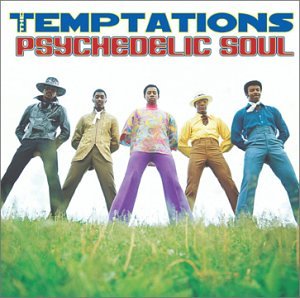
In the junior department at Sears, buying school clothes for my sophomore year of high school with my stylist (my sister Nancy) and Mom, I heard strings and French horns out of the store’s music speaker of a song by then so familiar and adored that my eyes closed involuntarily and my head fell back in a feigned swoon fifteen-year-olds do so well, resulting in a look of disdain on the face of my mother. The song was “Just My Imagination” by the Temptations, one of the many musical groups with countless hits that burst out of this little homemade studio called Motown.

My high school years spanned some of the most thrilling, volatile and frustrating times of my country’s history: 1970-74. We learned about the Watergate scandal and listened to impeccably dressed men testify in hearings on TV (and watched that one wife). Daily on our living room couch we listened to Walter Cronkite behind his TV news desk announce the number of American soldiers killed that day in Vietnam. My brother Bennett wore a black armband in his 1970 college commencement in protest of the war. That year The Temptations of Motown practically spit out the lyrics of their song “War”: War . . . huh . . . what is it good for . . . absolutely nothin’!

War was at a distance. I had no brothers or personal friends fighting in Vietnam. I lived in a small Michigan town far from peace protests in big cities, although Kent State was awfully close in the next state of Ohio, and there were campus protests at our local university. It was through the music collected by my brothers that I felt the war, and it was how my worldview and politics were shaped. I never saved enough money from babysitting to buy my own record albums, so I listened to the radio and played my brothers' albums on the turntable in the bay window while I ironed pillowcases, t-shirts, handkerchiefs and boxer shorts in the dining room. Besides Joni Mitchell's Ladies of the Canyon and Blue albums, I also listened to folk songs of peace by Joan Baez and Pete Seeger, Lennon’s “Give Peace a Chance” and “Imagine,” Cat Stevens’ “Peace Train,” “Fortunate Son” by Creedence Clearwater Revival. Crosby, Stills, Nash & Young, my favorite band in those days, had a protest song following the Kent State massacre called "Ohio." There was even a band named "War" with a song "Why Can't We Be Friends." Along the way were sprinkled funkadelic love songs and war songs out of Motown, like The Temptations’ “War.” 

The Temptations' song "War" was so popular that fans wanted a single (remember those?). Motown songwriters Norman Whitfield and Barrett Strong decided to release a new more blatant version by Edwin Starr, a different artist, so as not to upset conservative Temptations fans. It's awfully hard to sit still when you listen to music out of Motown, something has to move. I can feel myself wanting to get out on the street in protest when I listen to this song. "War can't give life, it can only take it away!" Someone said Music is the language of lovers. I'll talk more about that, in relation to Motown in another post, but truly, music was one of the healthiest and most powerful ways my generation responded to the travesties being orchestrated in the world.

I was almost oblivious to the fact that some of the music I loved best was being produced down the road in Detroit at Hitsville, U.S.A.: Motown Records, founded by Berry Gordy Jr with an $800 loan from someone in his family. It was the first record label owned by an African American. I just took this music as it came, loving it, but not claiming it as part of my local geography. My older sisters and brothers had heard little Stevie Wonder sing in Lansing when he introduced himself at a Youth for Christ rally: I’m Stevie Wonder, and I sing for Jesus. He signed on with Motown at age 11. Stevie Wonder is now the only remaining artist from the early days on the Motown label that included Smokey Robinson and The Miracles, The Temptations, Marvin Gaye, The Four Tops, Diana Ross & The Supremes, The Jackson 5, Gladys Knight & the Pips, among many, many more.

The Chrysler ad that recently inspired me to turn my attention to Detroit got me out to visit the Motown Historical Museum Saturday, which just happened to be Smokey Robinson’s 71st birthday (February 19). The museum duplex was the original site of Motown Records 1959-1972, after which Berry Gordy moved it to Los Angeles. Smokey and his musical group The Miracles provided the foundation for Motown’s artistic success, and Motown’s founder, Berry Gordy Jr was Smokey’s mentor. Berry made Smokey Vice President of Motown, which he remained until Berry sold the company in 1988 (for $61 million, not including music rights sold later). I'll tell you more about my two hours in this beautifully preserved, humble space that produced some of the most electrifying and long lasting music ever, in future posts.

This Thursday the Obamas will host Smokey Robinson and other Motown singers in another of their  "In Performance at the White House" concerts, this time honoring Motown’s music. They have already honored other American music genres with concerts and workshops for students: classical, Broadway, Latin, country, jazz, and music from the Civil Rights movement. It will be aired on PBS March 1. I don't know if anyone will sing what Rolling Stone ranked as the fourth greatest song of all time, but the man who co-wrote and recorded it won't be there to sing, sadly. The song was written and released under Tamla, the original Motown label, and one of the multiple subsidiary labels Motown eventually created. It was a turbulent time of war and race tensions. You can see some of that history in the photograph montage in the version I've chosen, below. Marvin Gaye himself had a troubled life, and it ended in a terrible episode of domestic violence on April Fool's Day in 1984 when he tried to intervene in a fight between his parents. His dad had a loaded gun. It went off, killing Marvin the day before his 45th birthday, making this song an incessant question that never seems to live into an answer.

I'll post more about Motown, and Detroit, in the days ahead.


What's Goin' On

Mother, mother
There's too many of you crying
Brother, brother, brother
There's far too many of you dying
You know we've got to find a way
To bring some lovin' here today - Yeah

Father, father
We don't need to escalate
You see, war is not the answer
For only love can conquer hate
You know we've got to find a way
To bring some lovin' here today

Picket lines and picket signs
Don't punish me with brutality
Talk to me, so you can see
Oh, what's going on
What's going on
Yeah, what's going on
Ah, what's going on

In the mean time
Right on, baby
Right on
Right on

Father, father, everybody thinks we're wrong
Oh, but who are they to judge us
Simply because our hair is long
Oh, you know we've got to find a way
To bring some understanding here today
Oh

Picket lines and picket signs
Don't punish me with brutality
Talk to me
So you can see
What's going on
Yeah, what's going on
Tell me what's going on
I'll tell you what's going on - Uh
Right on baby
Right on baby

~ Written by Renaldo "Obie" Benson, Al Cleveland, and Marvin Gaye
-
-

Thursday, February 10, 2011

A different kind of uprising

-
-
Diego Rivera's "Detroit Industry" murals in the Detroit Institute of Arts

It was like a new bird was born out of the burnt ashes of the phoenix Sunday.

If you don't live in the U.S. you might not know about the big hype over TV ads they run during the Super Bowl, the playoff football game between the two conferences of the National Football League. Advertisements cost $3 million per thirty seconds of air time. People like me who don't care about American football watch between touchdowns when the ads come on, for the entertainment, and to see if they spent their money well. For the most part, they're a whole lotta money spent on silly. In fact, the ads were so mediocre Sunday that Don started flipping to other channels during ads. Poor Madison Avenue.

But apparently in the third quarter an ad aired that hadn't hit the Internet ahead of time like many ads had done. It was two minutes long, unprecedented for Super Bowl ads, and cost $9 million to produce and air. (Sounds like maybe they got a bargain.) After the Packers beat the Stealers, the buzz started, and the ad was aired by 2,000 news organizations, including the NBC evening news that we watched Monday night. I immediately loaded it on YouTube and watched. It had 1.5 million views by then after the first 24 hours. At the moment of this post it has 4,740,910 views. The ad was made for the new Chrysler 200 automobile, starring Eminem, but more than being a car ad, it is an ad for Detroit. It's called "Imported from Detroit." Be among the millions and watch the ad here or at the bottom of this post. Chrysler is being criticized for taking the $15 billion bailout from us taxpayers, still being in debt, and then spending so much money on this ad. But as one of the "shareholders" of this loan (which won't be paid back, since they filed bankruptcy), I think the ad might be a good investment. The Chrysler 200 web site traffic has increased 1600%.

Of my 54 years, some of which I lived in Chicago, Oregon, California, and Istanbul, 43 years have been  in Michigan, with Detroit down the road. Two years we lived a couple of miles from the General Motors proving grounds. I grew up when the population shifted from the city of Detroit to the suburbs, becoming one of the wealthiest metropolitan areas of the country, sadly and ironically, as the city of Detroit began collapsing in on itself. The peacock strutted as the phoenix burned. Simultaneously there was the excitement of Motown Records, making black musical artists like Stevie Wonder (from Lansing, where I was born) international stars. After the Twelfth Street race riot of 1967, we felt the heart of Detroit turn sour, as white flight, political corruption, a disappearing tax base, and the decline of the American-made automobile turned a once gilded city into a sepulchre. There was little to be proud of, it seemed, and we felt the shame as the whole world thought of Detroit as the armpit city of the U.S.

Slowly a few have started to invest in Detroit. I've been skeptical, wondering how those with money to invest would want to do so in a still failing city. While our daughter Lesley attended art school in the heart of Detroit's cultural center, the city buses stopped running at night. The workers in the city who had no cars of their own couldn't even get to a night job! Automobile plants closed one by one as imported cars like Toyota and Honda became more and more popular. Unemployment rose, until Michigan's economy was one of the worst in the country. In high school when Lesley went to punk rock concerts at venues in Detroit, I worried about her in Detroit at night, even with friends. In the last few years, when I've wanted to go photograph interesting neighborhood art projects there, Don hasn't wanted me to go alone, even in the daytime. It's just how we think of Detroit.

So when the Super Bowl ad titled "Imported from Detroit" played, a miracle happened. I could feel the city down the road rising up from its nearly burnt out forging fires. You can watch the two minute ad for yourself, and maybe you'll feel something of its power too. As my friend at work said, whose husband was a Detroit cop for twenty years (such terrible tales he tells!), "he was speechless, and I cried." What is so moving to me about this little film-ad is how it gets inside the very aspects of Detroit that we had thought were its weaknesses, and convinces me they are its strengths! The laboring class, abandoned buildings, keeping on with toughness, even when everyone says you're burned up and out.

This little ad has inspired me to turn my attention to Detroit and share things with you. In the ad you can see shots of Diego Rivera's 1932-33 Detroit Industry murals at the Detroit Institute of Arts (top photo of this post). I'll write about that eleven month project soon, the only Rivera murals in the U.S., and what he thought of as his most important work. This is across the street from a beautiful art deco hotel where he lived while he painted the fresco in the gorgeous atrium court of the DIA and his wife Frieda Kahlo visited, and where our Lesley lived while she went to art school a block away. I felt such pride as I watched the Chrysler ad, about just these murals alone. I want my friends to know something good about Detroit. But I promise I will show you some of the "sepulchre" along with the "gilt."

As long as I live in Michigan, I want to pay attention to this city, as it keeps rising and filling its dead, abandoned spaces again with life. Maybe it will be safe one day for me to take my future grandchildren to walk its streets any time, just as we will in Chicago and New York City.


Detroit skyline on the Detroit River, viewed from Windsor, Ontario, Canada
taken the year we went to the North American Auto Show in 2007


The Chrysler ad "Imported from Detroit":


-
-