-
-
It’s a remarkable thing when what you’ve been meditating on and practicing, important truths of human nature—identity, humility, sorrow, betrayal, forgiveness, understanding, patience and love—are suddenly demonstrated by people with real faces, in real situations. Never mind that it’s TV, and fictionalized. This is training of the highest order.

In the last few weeks when Don and I got home from work, after we walked the property and then made supper, we sat down with our food to an episode or two of a British “costume” drama. I rarely watch TV. But as my friend Arti at
Ripple Effects said not too long ago, How are you holding up while you wait for the third season of “Downton Abbey”? Well, while waiting we queued up several other BBC costume dramas (thanks to our daughter Lesley’s recommendations) on Netflix. (I posted about “Little Dorrit”
here; I love not having to wait a week between episodes, or for the next season months later.) Next was “Lark Rise to Candleford,” and now that we have finished it, I want to tell you that this show is affecting me so much that I am channeling characters in my job and relationships.

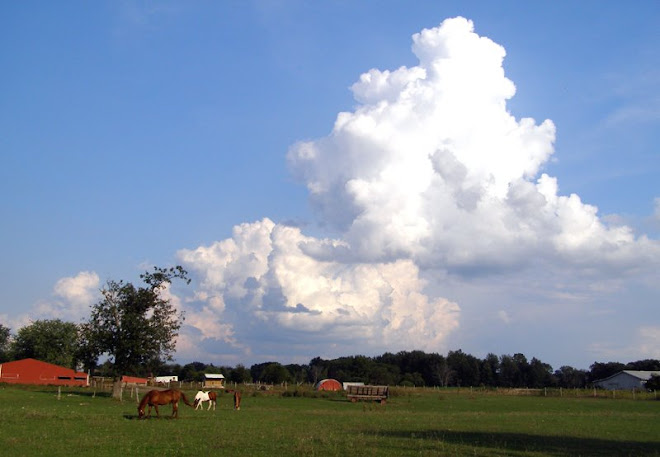
The Lark Rise series is based on a trilogy of semi-autobiographic novels by Flora Thompson, written in the 1930s and '40s about her life in a rural hamlet in the late 19th century. The setting is Oxfordshire and Buckinghamshire, England, with serene and sublime rural scenery. Lark Rise is a tiny hamlet of families of farmers and craftspeople, and Candleford is a town eight country miles away where fashion and progress are edging their way in. Young Laura of the hamlet goes off to work at the post office in Candleford as an apprentice to her mother’s cousin, the postmistress Dorcas Lane. Thus begins our witness of relationships between the folk of Lark Rise and the folk of Candleford, a sort of lateral Upstairs Downstairs footpath.
Queenie and Alf of the hamlet Lark Rise
Each character is flawed and deeply developed through the four seasons; they model how to push through problems and meet one another with tough love. No one is spared humiliation or failure. There are wise souls in the hamlet, and there are fools. Likewise, you will find the same mix in Candleford, as in all places. When the hamlet and town folk meet, class distinctions and prejudice surface. Society’s rules get challenged. Neighbors help neighbors at home, and between town and hamlet; they hurt them too. They live Rumi’s advice: “Be generous and grateful. Confess when you’re not" (from his poem
"The Well"). And then like the old Jerome Kern song says, they pick themselves up, dust themselves off, and start all over again.
Looking for wisdom, I channel Dorcas Lane, postmistress at the center of Candleford life to whom everyone goes with problems. When a student comes into my office for advice on what to do when she has gotten herself into a mess with a professor, missing class, handing in a paper late, threatening to fail, I ask myself,
What would Miss Lane say? You can laugh with me when I tell you that when I do find something to say out of her deep wisdom, I often feel my head tip just so, and my voice lilt like hers. “You have to go meet with him, and see if you can set it right. It might not be too late, mmm?” The other character I channel is Queenie Turrill (in the previous photos, above, played with effortless perfection by Linda Bassett), the elderly Zen beekeeper in Lark Rise who opens her home to anyone who needs her, which they often do. She is the center of the hamlet as Miss Lane is of the town. She teaches me not to take myself too seriously, to live in the moment, and to connect with nature. Both Miss Lane and Queenie have failings. A thread through the series is Miss Lane's "one weakness" which accumulates into many weaknesses. I'm not the center of anyone's universe but my own, but I do have about 700 students who turn to me for advice. I also have a grandson who is listening and watching as his little life unfolds. Sometimes the best advice comes out of one's own failings.

Four seasons, forty episodes, 2008 to 2011, and one actor shared with Downton Abbey: Brendan Coyle (Mr. Bates in “Downton Abbey,” Robert Timmins in “Lark Rise to Candleford”). Another actor, the most important one in the series for me, Julia Sawalha, who plays Dorcas Lane, is shared with BBC’s 1995 six-episode TV series “Pride and Prejudice” (which I've watched a dozen times at least): she was Elizabeth Bennet’s sister Lydia, the air-headed flirt who ran off with Wickham. It's illuminating how Sawalha pulls off extreme traits of idiot recklessness in Lydia and prudent serenity in Miss Lane.

The writing of Bill Gallagher’s screenplays is some of the best I have ever seen on film. Every episode made me weep (and often Don too). At the end of an hour’s watch, Don and I would look at one another, stunned that an easier and more clichéd line or closing had not been written, and that the writing was so intensely satisfying. Insights are astute and deep. This is not only for women. My husband got annoyed whenever the next DVD was delayed. Directed by Charles Palmer.
I welcome suggestions for other series. Next on our queue is "Cranford" but I am sure we'll start this one all over again at some point.
top photo:
ChurchCrawler at flickr
-
-


 In the last few weeks when Don and I got home from work, after we walked the property and then made supper, we sat down with our food to an episode or two of a British “costume” drama. I rarely watch TV. But as my friend Arti at Ripple Effects said not too long ago, How are you holding up while you wait for the third season of “Downton Abbey”? Well, while waiting we queued up several other BBC costume dramas (thanks to our daughter Lesley’s recommendations) on Netflix. (I posted about “Little Dorrit” here; I love not having to wait a week between episodes, or for the next season months later.) Next was “Lark Rise to Candleford,” and now that we have finished it, I want to tell you that this show is affecting me so much that I am channeling characters in my job and relationships.


 Four seasons, forty episodes, 2008 to 2011, and one actor shared with Downton Abbey: Brendan Coyle (Mr. Bates in “Downton Abbey,” Robert Timmins in “Lark Rise to Candleford”). Another actor, the most important one in the series for me, Julia Sawalha, who plays Dorcas Lane, is shared with BBC’s 1995 six-episode TV series “Pride and Prejudice” (which I've watched a dozen times at least): she was Elizabeth Bennet’s sister Lydia, the air-headed flirt who ran off with Wickham. It's illuminating how Sawalha pulls off extreme traits of idiot recklessness in Lydia and prudent serenity in Miss Lane.
 The writing of Bill Gallagher’s screenplays is some of the best I have ever seen on film. Every episode made me weep (and often Don too). At the end of an hour’s watch, Don and I would look at one another, stunned that an easier and more clichéd line or closing had not been written, and that the writing was so intensely satisfying. Insights are astute and deep. This is not only for women. My husband got annoyed whenever the next DVD was delayed. Directed by Charles Palmer.