alskuefhaih
asoiefh
Showing posts with label Orhan Pamuk. Show all posts

Sunday, September 04, 2011

Of shared taxis and shared language

-
-
These are shared taxis, called "dolmuş" in Istanbul; photo from the late 1980s;
"dolmuş" (pronounced dolmush) is related to the word "dolma" — stuffed pepper, 
grape leaves, etc., because these shared taxis get pretty packed with passengers;
they may not look like much, but even Orhan Pamuk rides in these around Istanbul.

I’m one of those people you can tell who I’m talking to on the phone by how I’m talking. I had a boss who was a boisterous, theatrical woman everyone adored. She laughed a lot and spoke with all the drama of the theater, in which she had leading roles for decades in our community. She entertained every time she opened her mouth. When I was on the phone with her the one time she called me at home, I got off and Don said,

“That was Pam, wasn’t it.”

“How’d you know?”

And then I reviewed myself as Pam for the past five minutes. I had spoken louder and funnier. I even scrunched up my shoulders with enthusiasm and smiled like a performer, as if I were Pam’s mirror self.

I don’t know why I do this. I think I want people to be comfortable, to feel good about themselves. I want them to think I like them so much I’m going to talk like them. I wouldn’t want to talk like me — boring, and heavens I wouldn’t want them to talk like me. I’d rather speak their “language.”

I think this trait is helpful for learning foreign languages actually. When you want to sound just like the person you’re talking to, you have a good chance of at least being intelligible.

When we lived in Istanbul I abhorred standing out as a foreigner. But nothing I could do would disguise the fact. Women in the dolmuş (shared taxi) would look me up and down to see if I had a manicure, how my hair was coiffed, where did I buy my clothes? They knew I was different. And when I opened my mouth and asked the driver in Turkish to stop at the next convenient spot, I was still me, an American in Istanbul, but I could speak their language, at least a bit, and I think they liked that I wanted to be like them. At the end of the day Don would massage the pads between my cheekbones and my nose, which were sore from speaking umlauts. We don’t have those in English. Those muscles screamed, “no pain, no gain.”

The truth is, at the moment I am reading Anne Lamott’s hilarious and helpful book about writing, Bird by Bird, and while she’s talking, I want to write like her. This undoes my theory about wanting the other person to be comfortable. She and I are not having a conversation!


me and my then boss Dr. Pam at my college graduation in 2001*

*Note about Dr. Pam:
There is probably no one who affected me finishing my BA in English more than Dr. Pam, who was my boss for seven years and gave me release time from work to take classes. If I remember right, in this shot she was telling me, "Ruth, YOU made this happen, young lady . . . " after I thanked and thanked her for making it possible. Dr. Pam is dyslexic and was told by her high school counselor that she would never do more than clean toilets. One day Pam saw a black woman walking down the street in PhD robes and decided that was what she wanted, and she did it, having to revise her dissertation 22 times, writing it as a single mom with a toddler bouncing on the bed, all the while battling dyslexia. Now she works with TRIO programs to help at-risk, low income, first generation and academically-middle-of-the-road kids set their sights on college.

-
-

Tuesday, October 06, 2009

a different light

-
-

Sky lover Violet Sky commented on the special warm glow of the morning and evening sun in October in my last post. I agree with her. Sometimes, though, as she no doubt could attest in Toronto, the glow of October's light is rather cool, if that makes sense, and sends you inside for a warmer radiance in a brick fireplace. As another friend says, it's starting to be "candle time."

Inge and I drove an hour and a half to my family's cottage (home of the Wild Things swing) for a writing retreat. It was dark and chilly - except for some brief moments such as this one when Inge was crowned with cool light on a stage of diamonds backed by milky drapes - and when it wasn't raining, light fingers of wind tipped the oak leaves spilling their rain reserves down onto the ferns, moss and tin roof. It was just the right atmosphere for nesting in the couch cushions behind a stack of books and a slow dancing fire.


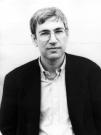
Conversations with Inge are about stories. Of authors she reads and the very few I read too, such as Orhan Pamuk (click here for my encounter with him). Oh - his beloved İstanbul is also my beloved İstanbul. Or is it? He steps out one way, and I step in another. It is his story, it is my story. Or we talk about her mother's scattered leaves of stories collected and piled in attic letter boxes before Inge and her sister arrived, a world apart. Or Inge's own story, which she wants to write down for her fourteen year old son, with her places, favorite things, her poetry, sketches and photographs. We talk about truth versus fiction. What is the Truth? How does Memory serve? How can I fill in the vast gaps of knowledge about daughter of Swedish immigrants Grandma Olive? I don't remember her at all though she must have held me before her death when I was four. What can I piece together of her from what I have heard from stories told by Mom: taping wallpaper designs around the walls to match patterns as she drew them; sisters Susan, Bootsie and Nancy: falling into the goldfish pool and being terrified of breaking something valuable in the not-too-child-friendly house; and brother Nelson: Saltine cracker & peanut butter sandwiches she made for his snack - each unique and colored by their own separate memories? And what truth of her can I corral from her china, or the "bastard" cabinet she painted, or her sewing box, and the vases she collected?

Just as there is a different light in October, and there is a different light inside, there is also a different light within each of us. This light is more powerful than we are sometimes willing to acknowledge, and it slants this way and that and glows uniquely from each individual. As Eric Maise wrote in one of the weekend's fireplace books (one Inge gave me on some Christmas or birthday), A Writer's Paris, from the chapter "Hemingway Slept Here":

I don't care where Hemingway slept. . . What writers write interests me. . . . If Hemingway is important, it is because what he had to say still touches us. But is it important that on this exact spot, now smack in the middle of a fancy mall, he had onion soup after a night of debauchery? Hardly. The past is no substitute for the present. Love the 1440s, love the 1680s, love the 1920s--love any epoch that touches your soul. But start each day focused on your writing and not on your literary maps.

Bring along the stories of others that have touched you. You can't help it. But write your story, as only you can.


Tuesday, October 02, 2007

a few hours

2:45pm
I am at Barnes & Noble, the first in line to have two books signed by their author, Orhan Pamuk when he visited our campus yesterday. He won the Nobel for literature last year. I’ve been waiting for this since June, when his visit was planned. (I posted about him previously here and here.)

The lady organizing the signing line comes to me and asks if I’ve brought the books from home. “Yes,” I say. So she gives me a yellow card to place at the title page in each book.

Then another woman comes and asks if I want him to sign the books to me personally. “Yes,” I say. So she has me write “Ruth” big and legibly on a post-it note on the same page.

During the 15 minutes I wait for Pamuk to come to the table piled with books I strike up a conversation with the young woman in line behind me. She is wearing a Muslim head covering. Since the novel of Pamuk’s I’m reading, “Snow,” is about women who wear headscarves in Turkey, I am intrigued.

The woman in the head scarf, Maweza is a Pakistani undergraduate student at my university. She is full of excitement, like me, and we try to act like calm women instead of giddy school girls (hey, I’m a 51-year-old school girl sometimes) as we wait for the Nobel-prize-winning author to appear. I ask if I can photograph her, but she declines.

Maweza ate lunch with Mr. Pamuk earlier, with lots of other students and faculty members. (Why didn’t anyone ask me?) She tells me about the time with him, how he talked about translators. (His books have been translated into 55 languages.) We talk about her native language, Urdu, and her love of Urdu poetry. I tell her about my friend rauf, and how when his friends write comments in Urdu on his blog, I think it looks and sounds beautiful. She and I really hit it off.
-

3pm
At last here he comes up the escalator, sits down at the table piled with books, and I hear him say to one of the staff that he won’t be signing personal names, there isn’t time. He will just sign his own name.

“Oh, ok,” I think.

Little side note. Ever since June, when I heard about Pamuk coming to campus, I’ve been practicing what I’d say to him when I met him, in Turkish.

So it was finally here. My moment to impress the 2006 Nobel prize winner for literature. I will welcome him in Turkish, and he will say, “Oh! You speak Turkish! What wonderful Turkish you speak! Imagine that, an American who speaks Turkish in this small university town. Did you live in Turkey? What? Istanbul! My city! How wonderful! How long? We have so much in common!” Etc.Etc.


At last, I walk to the table, he smiles, I welcome him in Turkish. He signs his name twice, once in each book. I say thank you in Turkish. I walk away.


Wham-bam thank you ma’am!


Maweza is next, he signs her book. She walks over to me where I’m snapping pictures, we stand around for a few minutes. Our mouths a little open, our faces a little stunned. We admit we are disappointed. I had been pretty big-hearted in line, saying, “you know, this isn’t the real Orhan Pamuk, we can’t know him, he only reveals himself to us in his books.” I was quite magnanimous then. But now, I think he’s an elitist snob.


-

7pm
I meet Inge outside the auditorium and she tells me about her book signing experience with Pamuk. (We missed each other by a few minutes.) It was wonderful. She thought he was perfectly charming and thinks she’s in love with him.

I screw up my face. I tell her my story. But we’re mature people. We allow for the other’s perspective. We’re good friends that way.


-

7:42pm
Orhan Pamuk is introduced by my previous boss, Dr. O. What an honor and all that.


-


7:45pm
Orhan Pamuk begins his hour-long talk. He reads from his latest book of essays titled “Other Colours: Essays and a Story.”


He stutters in English. He reads the English translation haltingly. Oh, what is happening? He’s talking about his Istanbul (my Istanbul) and the melancholy of a city heartbreakingly beautiful in its decay. I’m sitting forward over my legs. He screws up his face in a smile. He’s talking about his time with his daughter when she is 7, how they play a game of crossing the room without touching the floor (tables, chairs and pillows only). I am being disarmed one faltering sentence at a time. I’m laughing. I’m aghast, hand over my mouth. He’s talking about writing 9 hours a day and having a half page of good writing to show for it. He's talking about the smell of paper, the smell of ink. He’s laughing at himself. He’s honest, completely honest. I can see it and hear it. He’s talking about Balzac. Balzac! Tolstoy. Dostoevsky. But he isn’t stuffy. He’s goofy. He’s not a snob. He reads every day and takes his joy from novels. He can't wait to read the next writer coming out of Venezuela, China. He’s just a guy, a guy who writes. He writes every day and feels deprived if he can’t. He’s in love with writing.

He’s just a guy.


He’s just a writer.


-


10:53pm
I’m inspired, utterly.

Monday, September 17, 2007

freedom of speech, Constitution Day, and Turkishness


Sorry, this is a little long.


(When I started writing this post a couple days ago, I had no clue September 17 is Constitution Day in the US. You can see the Bill of Rights (amendments added to the constitution in 1791) here, including the First Amendment involving freedom of speech.)


I’ve written here about Orhan Pamuk, and I’ll write about him again soon, because I’ll hear him speak October 1 when he visits East Lansing.


Pamuk is the Turkish author who won the 2006 Nobel prize for literature. His life is threatened, he feels, after he was arrested last year for breaking Turkish Article 301 , the law against “denigrating Turkishness,” when he publicly criticized the Turks for their part in the WWI-era mass killings of one million Armenians as well as 30,000 Kurds in the 20th c. (which Turkey officially denies). Merely mentioning the “genocide” is against this Turkish law. To not be offensive, you’re supposed to call it the “Armenian question.” Charges were dropped against Pamuk in January last year, and sometime this year he moved to New York in self exile.

He moved partly because of the January 19, 2007 murder of Hrant Dink, an Armenian-Turkish newspaper editor, for his frank writing on the same topic. Pamuk felt threatened by the same Turkish nationalist group to which the 17-year-old who killed Dink belonged.

So, the other day I bought a Glamour magazine in line at the grocery store, and after I got home and stared at some revenge dressing and tummy flattening photos, I found an article about Elif Şafak (or Shafak), another Turkish author whose life has been threatened by the same Turkish nationalist group that killed her friend Hrant Dink and threatened Orhan Pamuk. (Look here for some stories about other inspiring women. I’ve also added the Global Diary link to my sidebar.)

Like Dink, Şafak wants Turks and Armenians to reconcile, but she understands it won’t happen until Turkey acknowledges what happened in 1915.

What does it mean to be Turkish anyway? In 1985-88 when we lived in Istanbul our lives straddled Asia and Europe: we lived in Asia and Lesley crossed the Bosphorus bridge every day to her British school on the European side of Istanbul, and Don did much of his export business from the European side. Turkey’s culture straddles Asia and Europe philosophically too, as there is a constant tension between conservative Muslim traditions and modern European trends as Turkey tries to become part of the European Union. I’m currently reading Snow by Orhan Pamuk (still, I know, I know, I started it in July), a novel about Turkish women who are torn between traditional Islam and modern Western womanhood, represented by wearing, or not wearing, head scarves, which have been banned in some public Turkish places.

Şafak’s 2006 novel Bastard of Istanbul is on my list of books to read. It’s about gender and cultural identity of Turkish, Armenian and Turkish-American and Armenian-American women, and the violence of their past. The world is changing fast, and books like this help me understand some of it.

Şafak, Dink and Pamuk risked their lives to tell the truth as they understand it.

My freedoms and lifestyle cost many people a lot. And yes, I know our rights as US citizens have been in question, especially since 9/11. But for the most part, we don’t get arrested for speaking our minds. I think Constitution Day is a good day to remember that.

Monday, July 09, 2007

Family Reunion II


For our annual 4th of July reunion, over the course of 5 days 40 people descended upon "Hukilau" - our family cottage.


It rained Tuesday night and Wednesday morning, when Don and I were there alone before anyone else came. The rest of the week it was sunny and beautiful.

I'm not going to concern myself with sequence or what day was what. This is just a little photo album.

This pair of swans toured the lake throughout the week.

All 7 siblings were there (Bennett alone was not there; he died in 1996). This is Nelson, the eldest. See his t-shirt? We all have "HUKILAU" t-shirts.

We celebrated Peggy's 65th birthday, she's Nelson's wife, here with their daughter Tammy.


Susan is #2, here with her husband Rodger.


Here is #3, my blogging sister and close friend, Ginnie (aka "Boots") and # 6 Jim (aka "Jimbo")

Forgive me, Nancy (#4) for this terribly blurry photo - the only one I have of you! with grandson Asher. It's not easy to catch this baby in a still moment.


John, #7 (in that other, obscure Michigan university's t-shirt, poor man)


And here's me, #8, at Ginnie's request, so I've added it. These birthday glasses of Nicholas' made the rounds, as you see.

And there were lots of kids and grandkids.


Audrey is Todd and Lisle's 4-year-old (Nancy's granddaughter)


Amy is Ginnie's daughter, from Atlanta, with her fiance Dennis, in from California


Wilma (Jim's wife) with daughter Stacy and granddaughter Greta

John's wife Sandy with granddaughter Ever Eden
Nicholas (Ginnie's grandson), Eli and Lydia (Jim's grandkids) and Audrey (Nancy's granddaughter) watching Wilma, Stacy and Greta in the kayak. Owl is watching over them.


Some of us swam across the lake and back. Here is Simon (Stacy's husband) in the water, with Sydney, Eric and Todd. Eric and Todd are Nancy's sons, and Sydney is Eric's daughter.


Greta, Jim's granddaughter


Lisle, Todd's wife, with Asher, their son

Ginnie and her domestic partner Donica (in the Wahiawa shirt), with Ginnie's daughter Amy and fiance Dennis playing Spades. That's Nicholas in the background.


When I needed to be quiet, I got away and read. I think I read one entire page over several days.


Nicholas, our son Peter, and his girlfriend Caitlin weren't resting with this book that Nicholas got for his birthday. (Our Lesley in NYC couldn't make it this year. Boohoo.)


Don with Audrey and Nicholas in one of many boat rides.


Amy and Dennis celebrating the holiday (and Nicholas' birthday). Please notice Dennis' MSU hat (he's a USC fan, being from southern California). How nice of him.


Nicholas (hiding), Caitlin and Peter in the paddle boat, that needs fixing - mostly goes backwards!


On Friday night we did our fireworks. Here are Lydia, Audrey, Sydney and Nicholas with sparklers.

Eli (Jim's grandson) with Uncle Don, shooting bottle rockets

There were fireworks all around the lake for several nights.


Here's most of the gang in one spot. Nelson, Peggy and Tammy had already left. Even though I didn't get a closeup of everyone, they're all in this photo (I think). That's me in the middle in the white pants right after hitting the auto timer on the camera and running to sit.


There are many family members in New York, Georgia, Florida, Alaska, Arizona, Michigan and Australia who couldn't make it. We missed you!

Monday, January 23, 2006

Orhan Pamuk


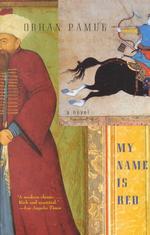
Orhan Pamuk is a Turkish writer and winner of awards. I first came across his work when I read about his 2001 novel, My Name is Red, after which I bought it and began reading it. I never finished it then, but I’ve started it up again.

Interestingly, and as these things sometimes go, Mr. Pamuk is in the news these days for telling the truth about how the Turks massacred Kurds and Armenians. It looked as though he would be drawn up in Turkish court for defaming "Turkishness," but in light of Turkey’s desire to be accepted as a member of the European Union and its sweeping changes toward a more tolerant society, the case was dropped today.

This post is about something Mr. Pamuk wrote, something I read this morning in My Name is Red. It’s in a chapter where a tree is speaking (!). It says,

“I don’t want to be a tree, I want to be its meaning” (p. 51).

As much as I get pleasure from this world -- nature, people, food, beauty-- I also want to find the meaning behind the surface.

I read in Rumi (another writer born in Turkey -- back in the 13th century) this morning:

"There is a happiness and a sadness

that are just figures on a bathhouse wall. Move through the
world naked, noticing the pictures

that live. Inner joy and grief are different from artful
appearance. Take off your

phenomena-clothes when you enter the soul’s steam bath: no
one comes in here with clothes on. "

(Rumi quote from Coleman Barks' translation of "Beggars" in a book of Rumi poems titled The Soul of Rumi)